The Best Shilajit in New Zealand: What I Learned Before We Started Sourcing Our Own

I did not come to shilajit looking for energy.
I came to it sideways, the way most people find the things that end up mattering. A few years back I went down a long rabbit hole about what modern life loads us up with. Residues in food. What is in the water. What accumulates in soil that has been farmed hard for a hundred years. I was not looking for a supplement. I was just reading.
Fulvic acid kept coming up. It is one of the compounds that forms when plant matter breaks down over a very long time, and it has a particular structure that lets it bind to minerals and carry them. That is the part researchers find interesting, and that is what pulled me in.
Then I read a bit further and found the older story. Fulvic acid is the main active compound in shilajit, and shilajit has been used in the Himalayas for thousands of years.
What I will not tell you
We do not make those claims about our product, and I am not going to make them here. We have not run the studies that would let us. What I can tell you is what fulvic acid does that is well established and directly relevant: it acts as a carrier. It helps trace minerals move into your cells rather than passing straight through you. That is the mechanism we sell, because that is the one we can stand behind.
Back to the story.
The older story
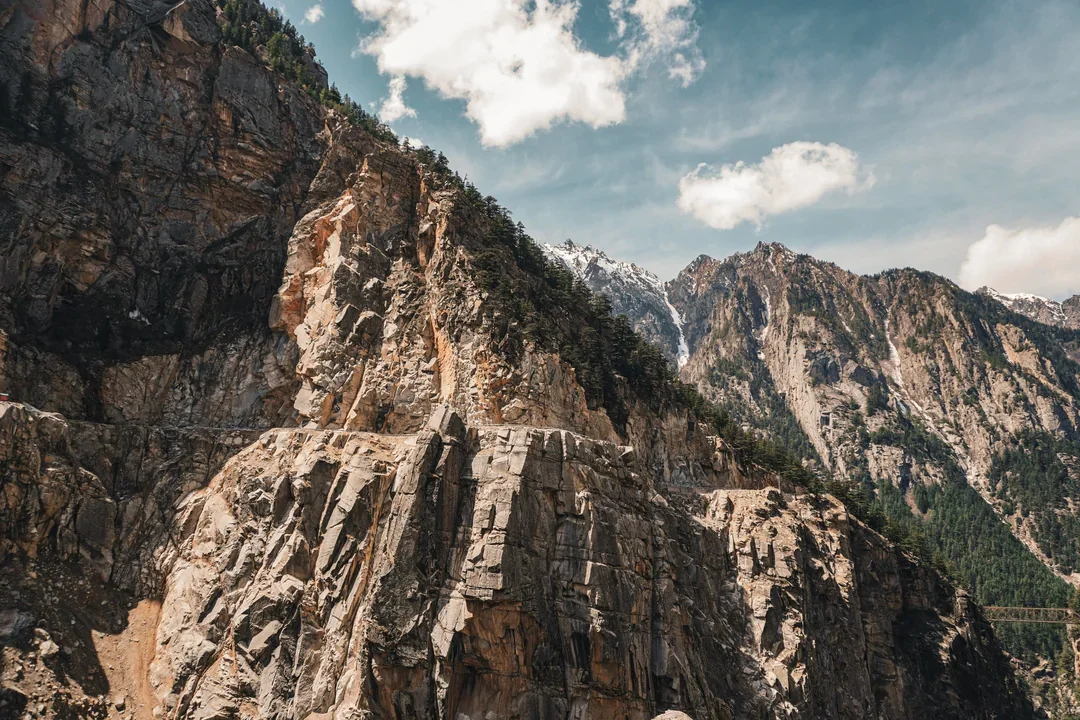
Shilajit seeps out of rock crevices in the Himalayas during the warm months. In Sanskrit it is called conqueror of mountains - the name is on our packaging - and it has been used across Ayurvedic and Tibetan traditions for a very long time.
The traditional context is the part that got me. This was not a wellness product. It was used by people living and working at altitude, where the air is thin and the body is under constant load. Yogis used it. So did porters, herders and soldiers moving through high passes. The traditional framing is not "energy" in the way we use the word now. It is closer to essence - core vitality, the stuff underneath stamina and strength rather than a lift sitting on top of them.
That distinction matters more than it sounds. Caffeine borrows from tomorrow. What the tradition describes is something you build.
What it has actually been like for me
I have been taking it daily for a while now.
The clearest thing for me is mental. More that the middle of the day stopped being a fight. The 3pm dip that I used to treat as a fixed feature of being in my thirties is mostly just not there any more. I get more done at my desk in the afternoon than I used to get done all day.
In the gym it showed up as staying power rather than a bigger first set. Less falling apart at the back end of a session. More motivation and energy to push through until the end. Better the next day.
I want to be straight about the level of proof here. That is my experience, one person, without a control group. Some people notice something in the first fortnight, some take longer, and some do not get much from it at all - which is why we run a 90-day money-back guarantee rather than pretending otherwise. Everyone is a bit different.
What I do know with certainty is the input. Every day I take it, I am getting fulvic acid and 84+ naturally occurring trace minerals in a form the body can actually use. Modern food grown in tired soil is short on exactly that. Whatever else it is doing, it is topping up something real that is genuinely missing.
How to judge shilajit before you buy it
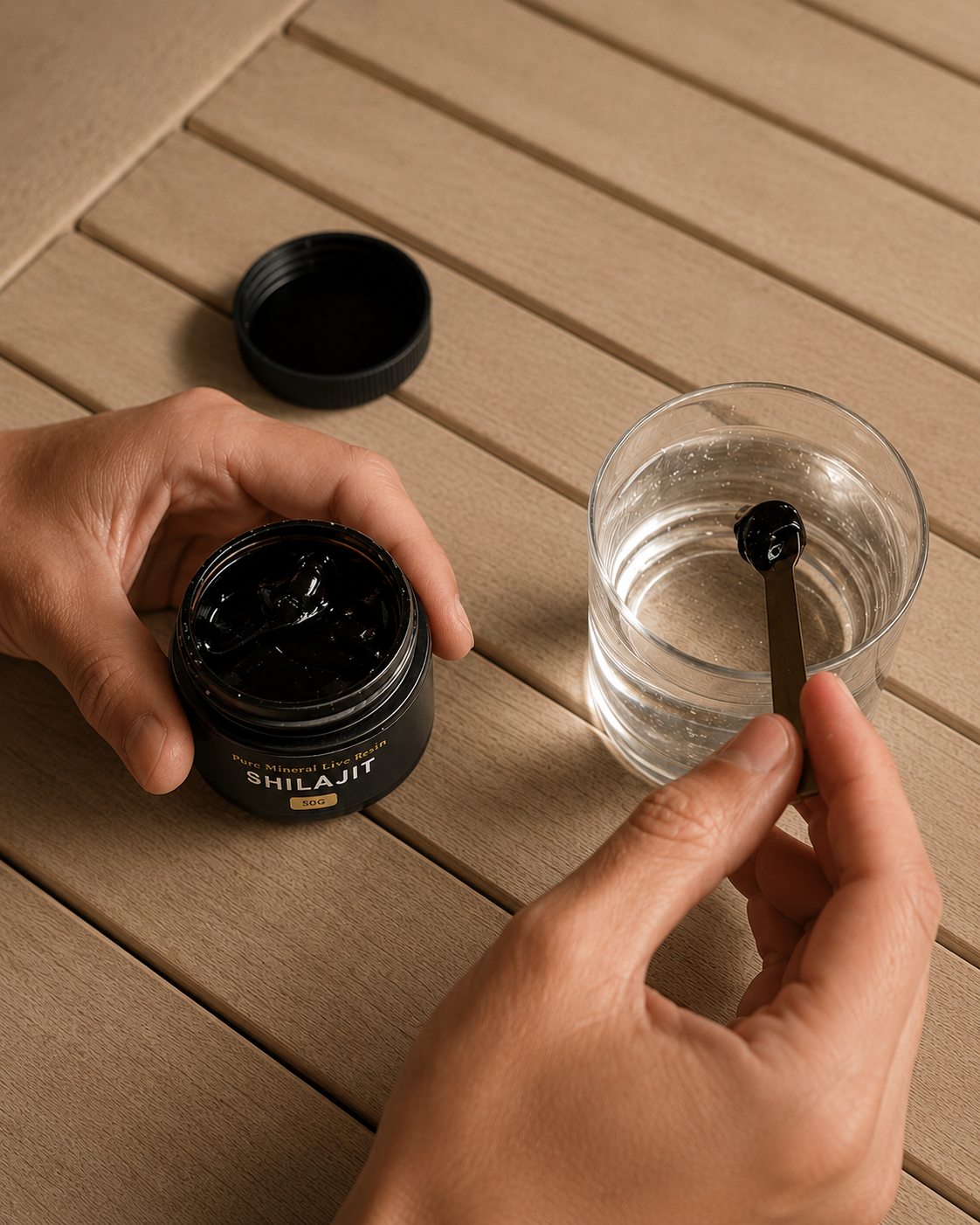
Resin-like tar is the most traditional form of Shilajit.
This is the part I wish someone had written for me. Shilajit is one of the easiest supplements in the world to fake, and New Zealand is a small market with very little scrutiny. Here is what I would check, in order.
1. Is it resin, or is it powder in a capsule?
Resin is the traditional form and it is the concentrated one. Powders and capsules are often resin that has been dried, bulked out and standardised down, sometimes to a fraction of the active content. Gummies are worse again - once you have added sugar, gelatin and flavouring, there is not much room left for shilajit.
Resin is less convenient. That is the honest trade-off, and it is why we make pressed resin tablets as well for people who travel. But if you are comparing products, compare resin to resin.
2. What is the verified fulvic acid content, and who verified it?
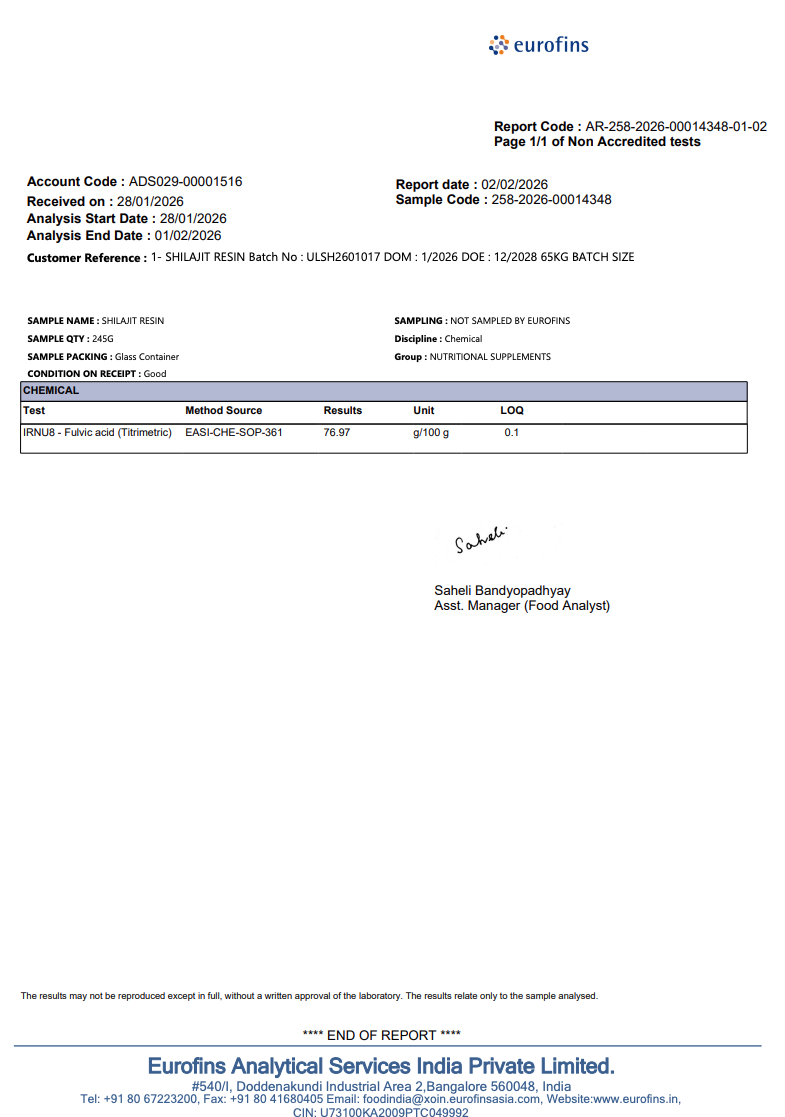
This is the single most useful number, and it is the one most sellers avoid printing.
Ours is verified at over 76.9% fulvic acid, tested by Eurofins Analytical Services in India using a titrimetric method. If a brand gives you a range instead of a figure, or a figure with no lab attached, that number is a marketing decision rather than a test result.
3. Who tests it for heavy metals, and for what exactly?
Lead is the number one risk with cheap shilajit. It comes out of rock. If it has not been purified properly, or if it has been cut with something, that is where it shows up.
Our resin is independently tested by Hill Laboratories here in New Zealand for heavy metals, mycotoxins and contaminants. Not "third-party tested" as a phrase on a label - a named New Zealand lab, with reports you can ask us for. Email hello@equil.co.nz and we will send them.
In fact - view our third party testing results here.
Nearly every shilajit product on the market says "third-party tested". Very few will tell you who did the testing or what they tested for. Ask. The answer tells you most of what you need to know.
4. How was it purified?
Traditional purification uses water. The raw resin is dissolved in spring water, filtered in stages, and concentrated at low temperature - ours stays below 40°C, because fulvic acid does not survive heat well. It is slow and it costs more.
The cheap route is chemical solvent extraction. Faster, higher yield, and you are then relying on the manufacturer to remove the solvent properly.
Almost nobody in this category talks about their purification method. That silence is usually the answer.
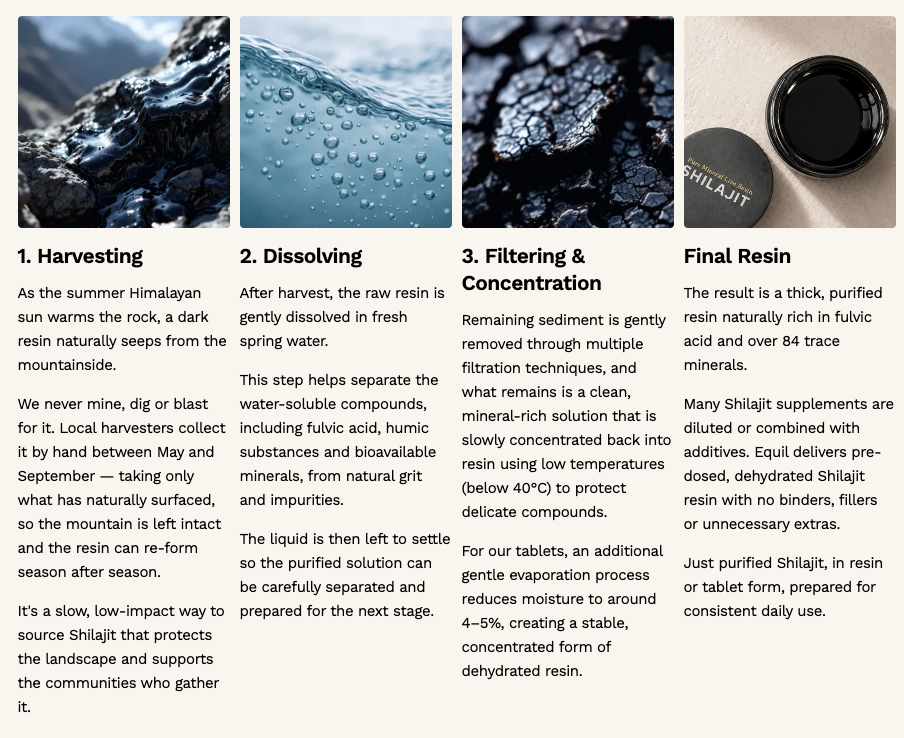
Equil purification methods - from mountain to box. More info here.
5. Was it harvested or was it mined?
Ours is wild-harvested by hand from rock crevices in the Uttarakhand Himalayas, during the warm summer months when it seeps out naturally. No mining, no blasting. It is a small seasonal window and it limits how much anyone can get, which is part of why genuine resin is not cheap.
6. Work out the cost per serve, not the sticker price
A 50g jar at a pea-sized daily dose lasts a long time. A cheaper jar that you get through in six weeks is not cheaper. Do the division. Check out ours here
Why we ended up sourcing it ourselves
I was buying shilajit before Equil sold it.
But it was expensive - and from a US company, not an NZ one.
The problem was that every time I tried to answer the six questions above about a product I could actually buy in New Zealand, I could not. No fulvic acid figure, or a suspiciously round one. No named lab. Nothing at all about purification. Plenty of confident claims about what it would do for me, and nothing about what was in it.
Dave and I got to the point where the only way to be satisfied with the answers was to go and get them ourselves. So we did - direct from our friends in Uttarakhand, with our own testing on this end, and a decision early on that we would publish the numbers anbd readings as part of our No BS philosophy.
That is the whole reason Equil sells shilajit. Not a market gap on a spreadsheet. I wanted a jar I actually trusted, and I could not buy one.
We are a small family business in Kerikeri & Waiheke. NZ family-owned - the resin itself comes from the Himalayas.
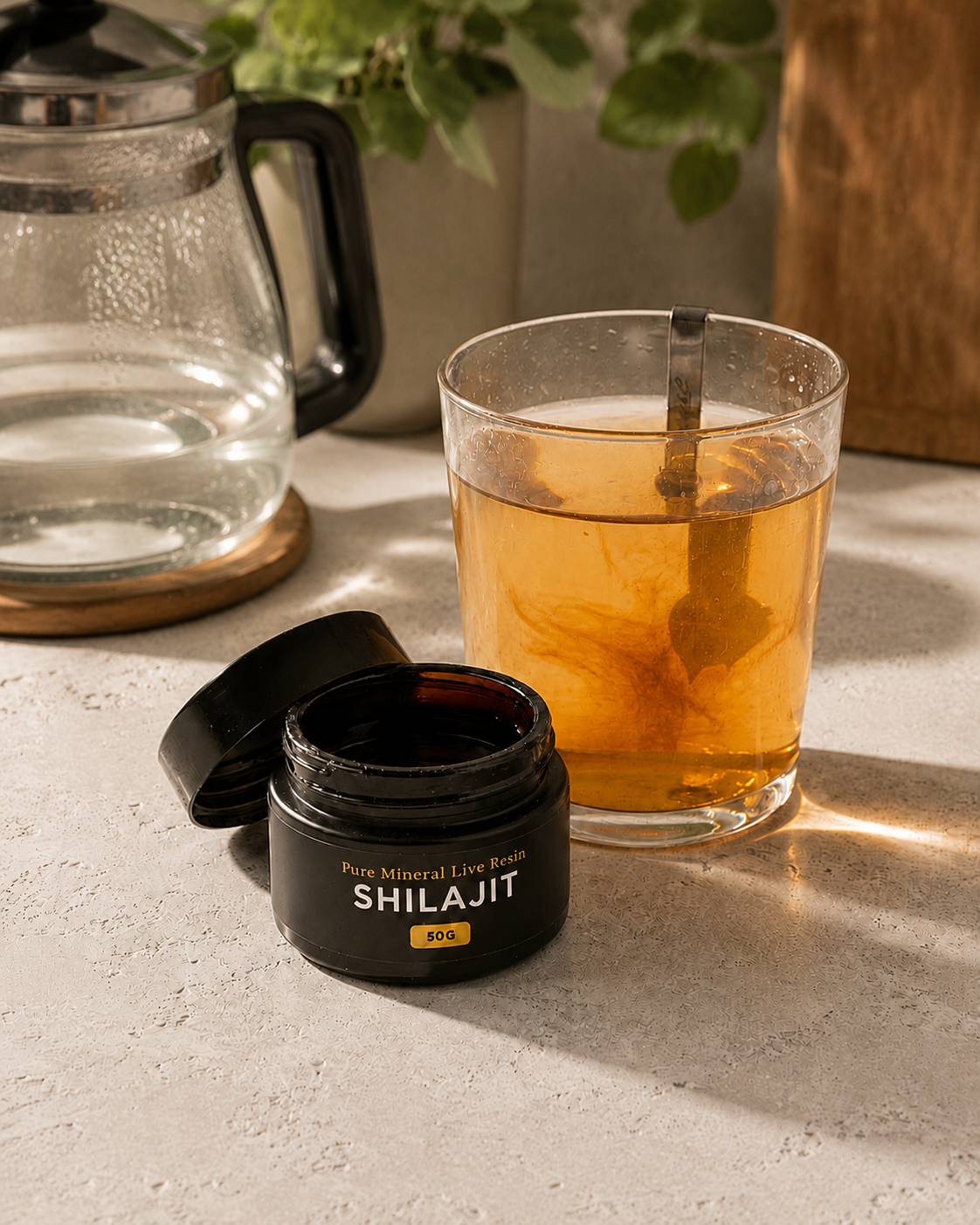
Equil Shilajit resin in hot water in the morning.
How I take it
Pea-sized amount off the scoop, first thing. Stirred into warm water most mornings, with dandelion root to give it even more earthiness.
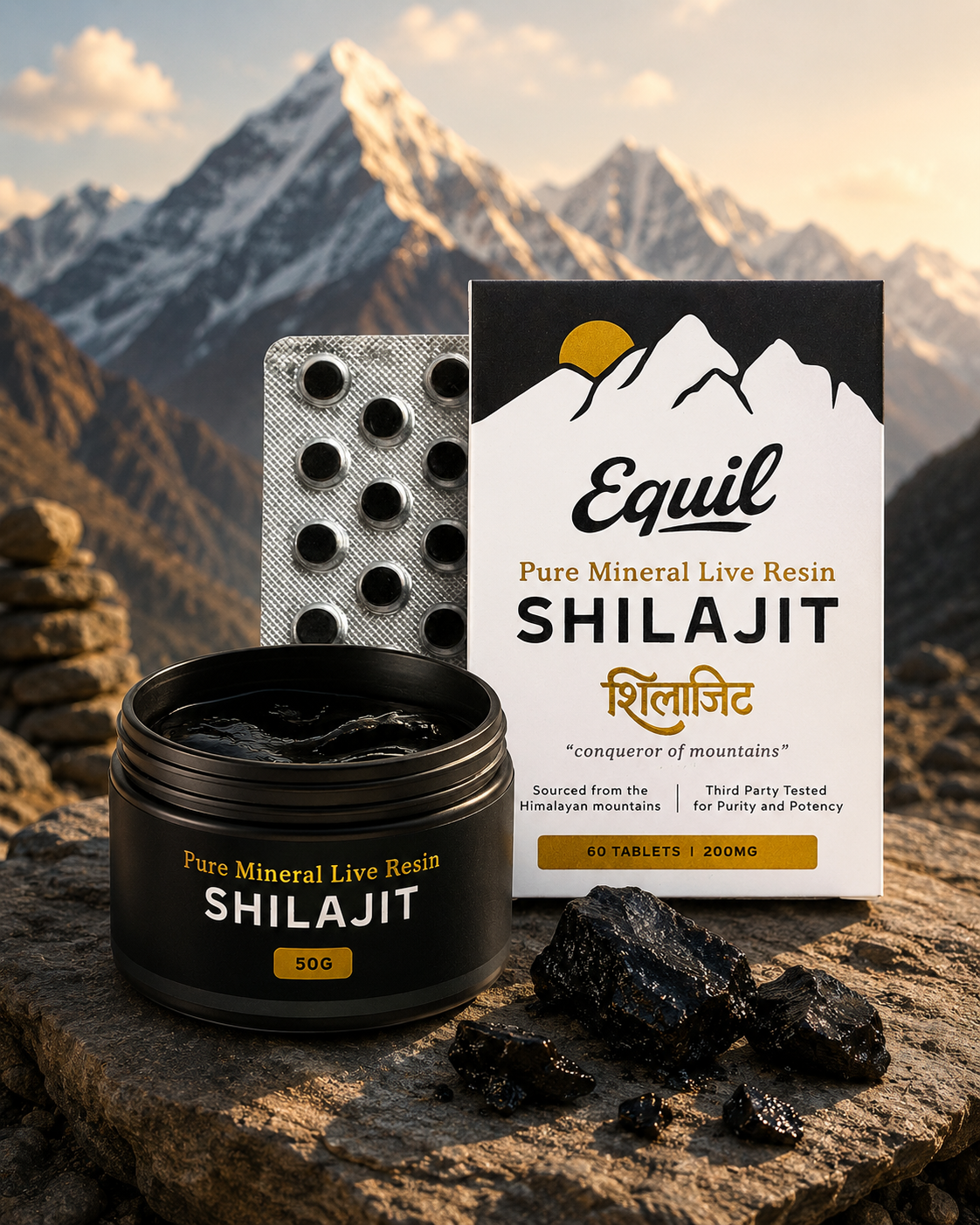
Sourced sustainably from the Himalayas.
Takes about 30 seconds. Most people notice something in the first one to three weeks. No spike, no crash.
Learn more about our shilajit here
Common questions
How much shilajit should I take daily? About a pea-sized amount, once a day, of the resin. Consistency does more than dose - a small amount every morning beats a large amount twice a week.
Is shilajit resin better than shilajit tablets or capsules? Resin is the traditional and more concentrated form. Tablets are a compressed resin format built for convenience - travel, work, anywhere a glass jar and a scoop is impractical. We make both and take both. The jar is the daily ritual, the tablets are real life.
How do I know shilajit is safe? Ask for the lab report. The main risk with low-quality shilajit is heavy metal contamination, particularly lead. Ours is tested by Hill Laboratories in New Zealand and we will send you the report if you ask.
When will I notice anything? Most people, one to three weeks. Some sooner, some not at all. If it is not doing anything for you after a fair go, our 90-day guarantee covers it.
Can I take it with coffee? Yes. It stirs into coffee, tea or cacao without any trouble.
Who should not take shilajit? Not for use by pregnant or breastfeeding women, or under 18s. If you take prescription medication or have surgery scheduled, talk to your doctor first. Keep it at least two hours apart from iron supplements. It is not a substitute for a balanced diet.
Cheers for reading this far.
Graedon
Co-founder, Equil